Anke Richter has spent her career getting closer to coercive control than almost anyone else in the country, and mapping exactly how it works when there's more than one abuser behind it.
In 2013, Anke was deep into the hardest research of her career, chasing down survivors of Centrepoint, the sex and therapy commune north of Auckland whose guru, Bert Potter, had just died. She interviewed a woman who'd been a teenager there and called herself “the commune concubine.” She got so far into the trauma and denial and conflicting stories that she couldn't get back out. Two years later she had to abandon the book. She'd been diagnosed with PTSD from vicarious trauma.
They say everyone is your mirror, and that proved true for Anke during these intense years. While researching one of the country's most damaging cults, she discovered she was inside one herself.
“Coercive control doesn't only happen between two people behind a closed door,” says Anke. “It happens in groups too, sometimes led by one person and sometimes carried sideways by an entire community, and the tactics are almost identical.”
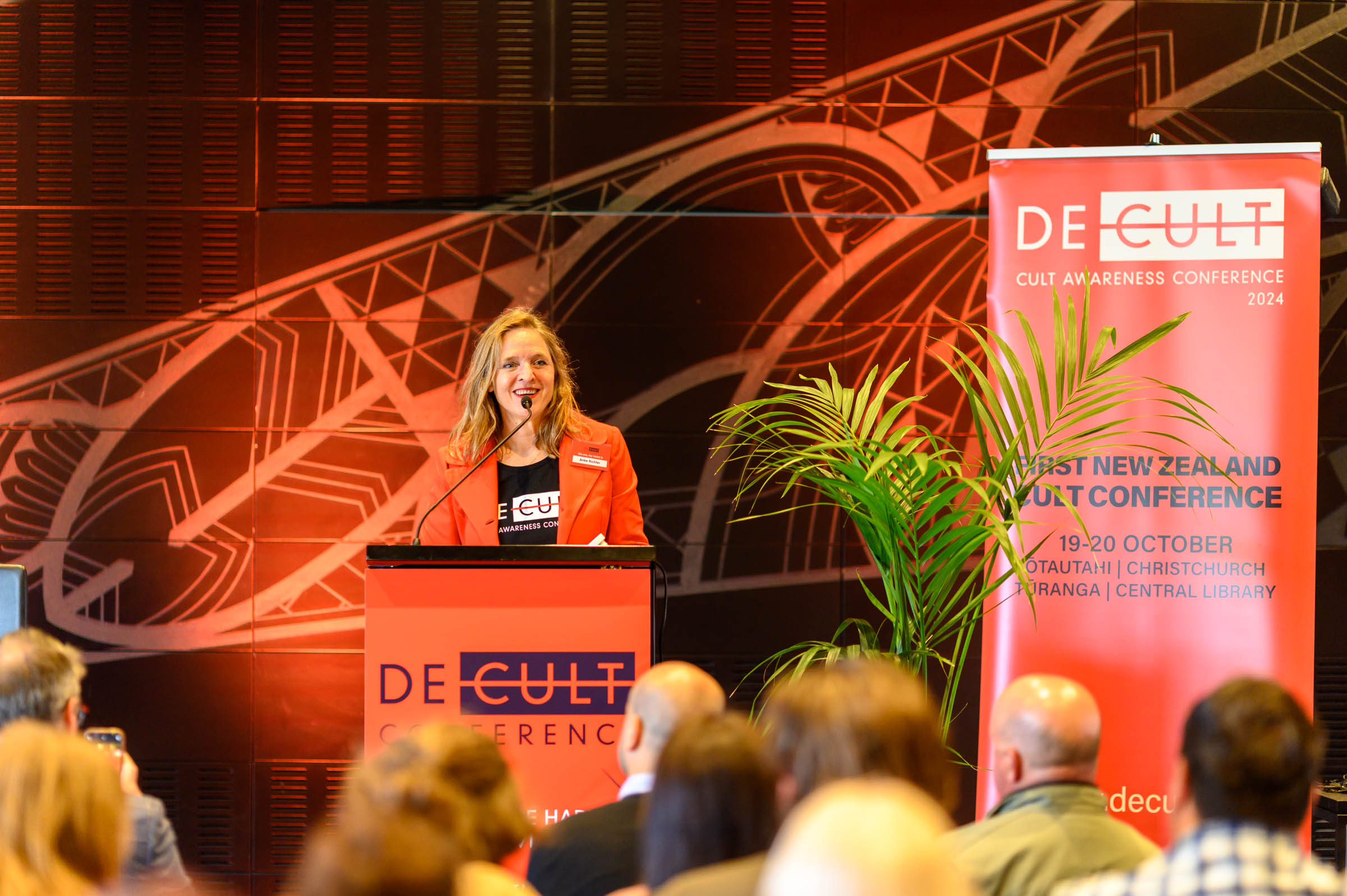
Anke started out about as far from this work as you can get. She was a celebrity journalist in Germany, wrote magazine features and ran a talk show. She later became a foreign correspondent for German media from New Zealand. Now she leads Decult, New Zealand’s first cult awareness conference which she started in 2024.
Her Centrepoint research ended up feeding into a TVNZ documentary about the commune, and it put her on a path she didn't choose so much as fall into. She went on to break the story of Agama Yoga in Thailand, a self-styled tantra school where more than 30 women reported sexual abuse. New Zealand Geographic then asked her to do the same work with Gloriavale leavers, tracking down people who'd left and were finally ready to talk about coercive control instead of the sanitised version everyone else had been sold. All of it became her book, Cult Trip, published by HarperCollins.
Somewhere in the middle of all that, Anke was a member of ISTA, the International School of Temple Arts, active here in New Zealand. She calls it what it was, which is a sex cult.
She was researching the aftermath of one disaster while sitting inside a different one, and it has come to illustrate one of the points she makes time and time again in her work.
“People who end up in cults aren’t weak. Cults want smart, educated people with social capital,” she says. “And money, ideally, who can bring in others. What gets you into cults isn't that you're weak and vulnerable and stupid and gullible. It's usually because you're an idealist and you want a better world.”
After Cult Trip came out, people started finding Anke, like former kids from cults and families who'd lost someone. All of them asked the same thing: who do I actually talk to? New Zealand didn't have trained cult-specific counsellors. It still barely does. Germany, where Anke is from, has had government-funded organisations for this for decades. But we had nothing.
So three years ago, more or less on her own, Anke started Decult. The first conference ran in Christchurch in 2024. It sold out. Forty international speakers, 240 people in the room, 250 more watching the livestream, 30 media stories, two dozen podcasts, for a topic almost nobody here had a name for. In 2025 that work won the global Champion of Change Advocate Award and last month, an award from the International Cultic Studies Association (ICSA) in the US. Decult 2026 is already in the making.
I asked Anke whether the overlap between coercive control in a cult and coercive control in a relationship was intentional or just coincidence. She pointed to the BITE model. “It stands for behavioural, information, thought and emotional control,” she explains. It maps onto a controlling relationship the same way it maps onto a cult.
“It's the crazy making,” she says. “It's the gaslighting. It's making you believe you are the problem, that you have to try harder, you have to work harder, you have to love more, you have to be better.”
So why don't people just leave? Anke doesn't think that's the right question.
“There's always an initial honeymoon phase,” she says. “They're still craving what they had in the beginning. They're still hoping that if they just do better, if they just believe more, the love will come back.”
In a group, she says it's worse, because the control isn't just coming from the top. “It comes sideways as well. You have a whole community around you who are controlling you too, and normalising the abuse, because they're all part of it.”
You might not have a friend on the outside, a doctor you trust, or even know a social worker exists. “It's an invisible prison,” she told me. “That's the best way to describe it.”
She's also backing Debbs Murray's push to get coercive control properly criminalised in New Zealand law, group-based and one-on-one both. “That needs to happen,” Anke says. “That needs to be criminalised.”
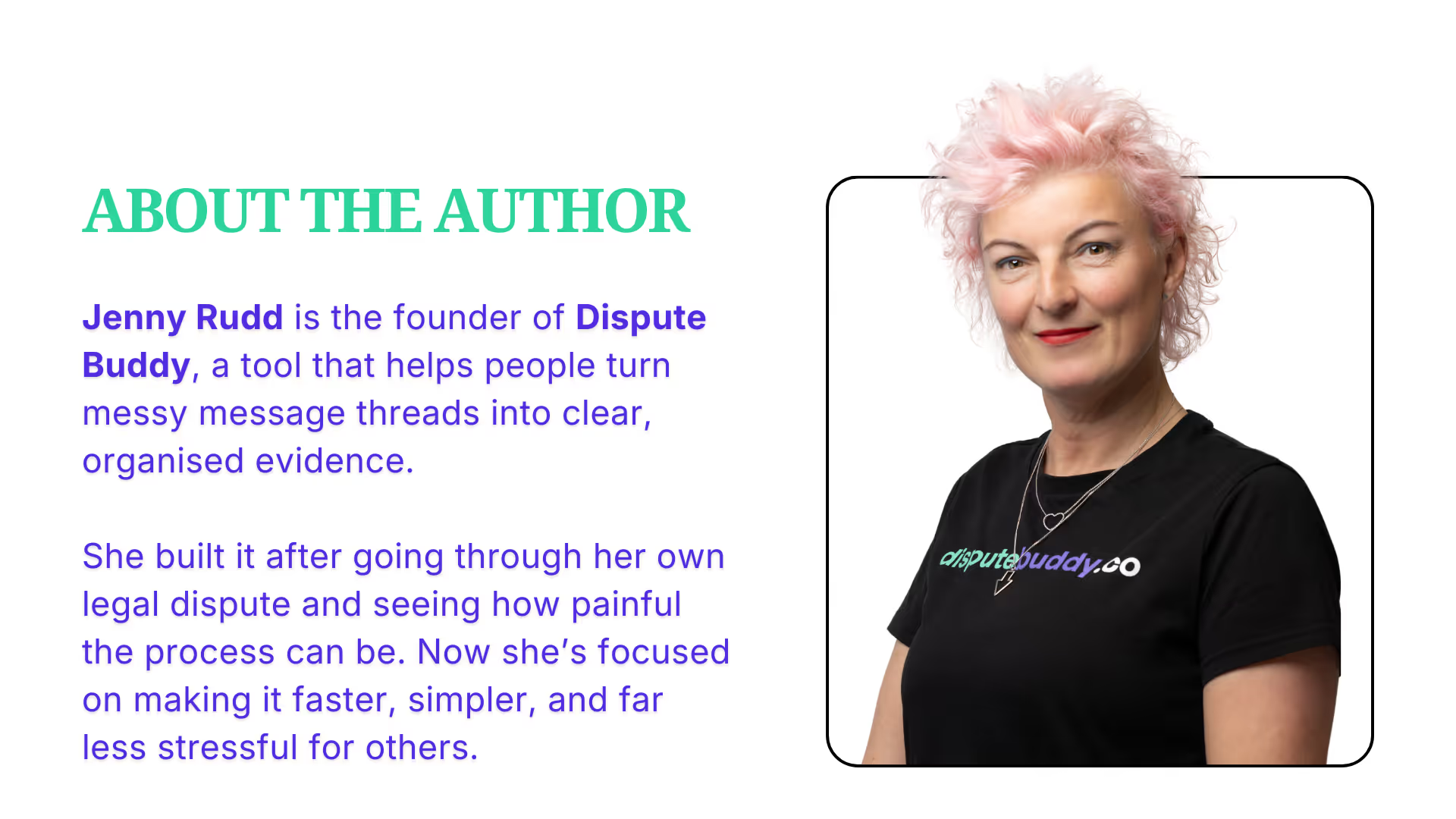
It's the same invisible prison Dispute Buddy's founder, Jenny Rudd, found in her own relationship. When the team built the platform's behaviour analysis, Jenny ran her own messages through it before anyone else's. It came back and said her ex had maintained a long-standing pattern of coercive control over her. She'd built the business and she knew exactly what coercive control was, but her first thought was still, 'oh, it probably wasn't that bad'.
Anke's right. You don't see the forest for the trees while you're standing in it. That's exactly why a neutral pair of eyes, or in Dispute Buddy's case, a neutral bit of software, matters so much.
Join Anke at the upcoming Decult 2026 conference in Christchurch from October 24-25.
Get tickets here.