Courts often use text messages and chats to show patterns of behavior over time. But you shouldn't need to be a legal expert to collect your messages and prepare that evidence. You just need the right tool.

The short answer is yes. But it's not about one bad message, it's about patterns.
Family courts across the US use text messages to show patterns of behavior over time. One angry text isn't really relevant. We all have bad days now and then. But six months of the same communication style? Well, that's a pattern.
Legal experts confirm that courts look for frequency, context, and consistency. And they want to see the full picture, not just the worst moments.
That's why screenshotting and cherry-picking a few messages doesn't work.
Courts need complete conversation threads with timestamps and context. They want to see how someone communicates when they think no one's watching.
California family law attorneys explain that messages must be authenticated before they're admissible. That means proving they're real, unaltered, and show what they claim to show.
These things matter:
This is where most people get stuck.
They have the messages. They know what's there. But they can't prove it in a way the court will accept.
Here's what happens when you try to compile this yourself:
You screenshot messages one-by-one. You miss important context. You can't show the full pattern because you're only seeing pieces. Your lawyer has to spend hours sorting through what you've sent them. And don't forget, when your lawyer is working, you're paying!
Research on digital evidence shows that professional extraction tools like Dispute Buddy preserve metadata and timestamps that courts require for authentication. They create the kind of evidence that stands up under scrutiny.
More importantly, they show patterns you might not see when you're reading one message at a time.
Texas family court experts note courts recognize specific communication patterns that demonstrate problematic behavior:
- Refusing to respond to messages about the children.
- Sending late-night messages designed to provoke a reaction.
- Ignoring reasonable requests then claiming you never communicated.
- Using guilt or threats to control decisions.
Custody attorneys confirm that judges pay attention to who initiates child-focused communication, who responds cooperatively, and who makes co-parenting difficult.
It's not about one smoking-gun message. It's about showing how someone communicates month after month.
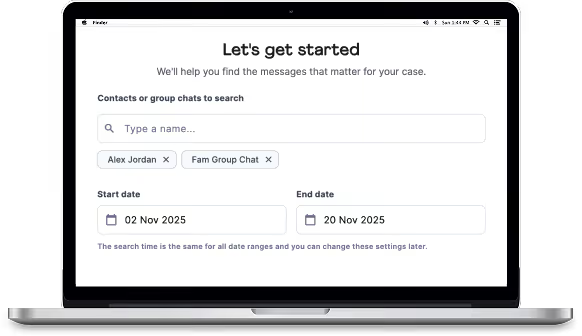
We built Dispute Buddy specifically so you could use your texts in court. Our founder, Jenny Rudd, had to go to court and submit texts as evidence. It was so stressful and she was so terrified she'd miss the most important messages (because who has time to scroll through years of texts?). So she built Dispute Buddy, an app you download onto your computer. You just connect your phone, enter the contacts and date range, and Dispute Buddy finds the texts and exports them into a report with everything the lawyer needs including dates, times, and phone numbers. even better the report has a summary of the messages that the lawyer will need to look through and find themselves (saving you money on legal fees).
The report finds what you might not see when you're in the middle of it - the frequency of certain types of messages, the timing patterns, the communication style over time.
It's like having someone else read through everything and say "You're right. Here's what stands out."
Your lawyer gets a professional report instead of a pile of screenshots. The court gets authenticated evidence that meets their exacting standards. You don't have to read through months of difficult conversations trying to figure out what matters. And you don't need to pay your lawyer every six minutes, while you explain to them what happened. They just read a report
Proving all these patterns of behavior shouldn't require you to become a legal expert.
You just need the right tool.